

WHY DO YOU NEED AN INTERIOR DESIGNER?
Whether you are looking to renovate your entire home or simply revamp a room, working with an interior designer can completely transform your experience.
Think of it this way: an interior designer is a bit like a best friend. Not just any friend, but the one who tells you the truth. Even when it’s not what you expected to hear. And in a process that is complex, emotional, and investment-heavy, that honesty is invaluable.
Creating a home is not just about how it looks. It’s about how it works, how it feels, and how seamlessly it supports your everyday life.

Let’s start with what’s on everyone’s mind. For most people, the first question is always the same: “Can I afford an interior designer?”
And it’s a fair question.
At first glance, hiring a designer may feel like an added expense. But in reality, it often works the opposite way. A good designer doesn’t just design. They guide, plan, and protect your investment.
Without professional guidance, it’s very easy to make costly mistakes such as:
Choosing the wrong layout and needing to redo construction
Ordering furniture that doesn’t fit the space
Selecting materials that don’t perform as expected
Miscommunication with contractors leading to delays or rework
An interior designer helps you avoid these problems. Every decision is considered in advance, every detail is planned, and every element is aligned before anything is built or purchased.
And then there’s an added benefit many people don’t realise: access to trade-only suppliers and discounts. These savings can significantly offset the design fee.
So while it may seem like an extra cost upfront, in many cases, it becomes a smart financial decision overall.
Some other key reasons :
Space Planning & Expertise

One of the most underestimated aspects of interior design is space planning.
It’s not just about where things go but it’s about how a space flows and how it feels to move through it.
A well-designed layout can make a home feel larger, calmer, and more functional without adding a single extra square metre.
Interior designers are trained to see possibilities that aren’t immediately obvious. Small adjustments like repositioning a wall, rethinking circulation, or rebalancing proportions can completely transform how a space works.
At Be-Studio, for example, we explore multiple layout options before even entering the concept phase. This ensures that the final design isn’t just visually appealing, but genuinely tailored to how you live.
Often, clients can’t quite explain why a space suddenly feels “right” but that’s exactly the point.
Time Management

Designing or renovating a home is exciting but it can also be overwhelming.
There are hundreds of decisions to make, suppliers to coordinate, timelines to manage, and unexpected challenges along the way.
For someone balancing a busy life in London, this quickly becomes stressful.
An interior designer takes on that responsibility for you.
They manage:
Ordering and tracking furniture and materials
Coordinating with contractors and trades
Scheduling installations and deliveries
Ensuring everything progresses according to plan
Instead of juggling endless details, you’re able to step back and enjoy the creative side of the process.
More importantly, you gain peace of mind knowing that everything is being handled professionally.
Technical Drawings

Interior designers produce precise drawings that guide the entire construction process, including:
Furniture layouts
Lighting layouts
Electrical plans
Joinery details
Material specifications
These drawings are essential tools that ensure clarity between all parties involved.
Without them, misunderstandings are common. A misplaced socket, incorrect lighting placement, or poorly executed joinery detail can compromise the entire design.
With proper documentation, everything is thought through in advance. Problems are solved on paper before they appear on site.
This level of planning allows a project to run smoothly.
Cost Estimates
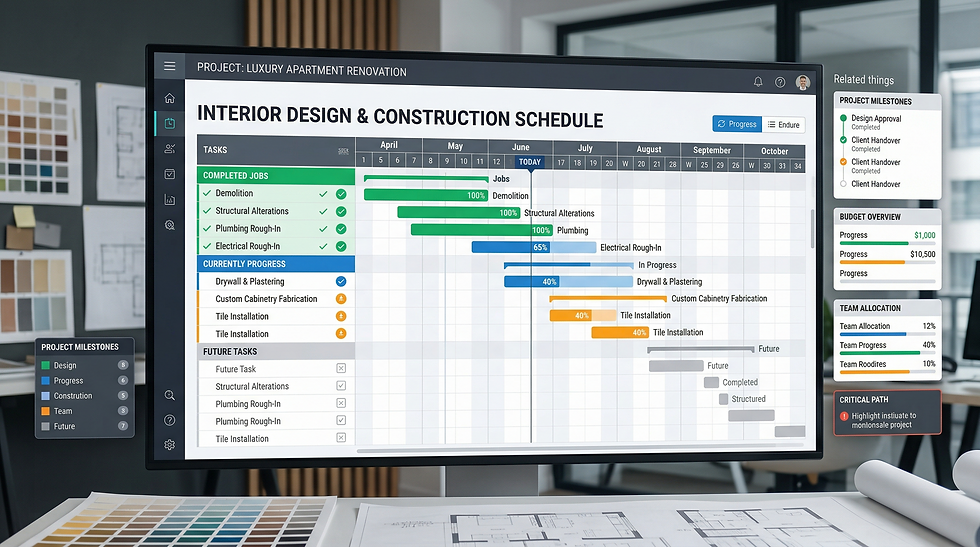
Another key advantage of working with an interior designer is having a clear, structured understanding of your budget from the beginning.
Designers prepare detailed cost estimates that cover every aspect of the project from large investments like kitchens and sofas, down to smaller details like accessories and fittings.
This level of clarity helps you:
Make informed decisions
Prioritise where to invest
Avoid unexpected costs later on
Rather than reacting to expenses as they arise, you move forward with confidence, knowing exactly where your budget is going.
Creating a Home That Works for You
It’s easy to think of interior design as something purely visual. But in reality, it goes much deeper than that.
A well-designed home can:
Reduce daily stress
Improve how you use your space
Create a sense of calm and balance
Enhance your overall quality of life
This is especially important in a fast-paced city like London, where your home becomes your retreat.
Design styles like Japandi and Scandinavian interiors are increasingly popular for this reason. They focus on simplicity, natural materials and thoughtful design.
An interior designer helps translate these principles into a home that feels personal, functional, and timeless.
At the end of the day, an interior designer is not just someone who makes your home look beautiful. They bring structure to complexity, clarity to decisions, and confidence to the entire process. They help you avoid costly mistakes, save time, and achieve a result that would be incredibly difficult to reach on your own.
So yes perhaps they are a bit like a best friend. But one with a trained eye, a strategic mindset, and the ability to turn your vision into a home that truly works for you.


